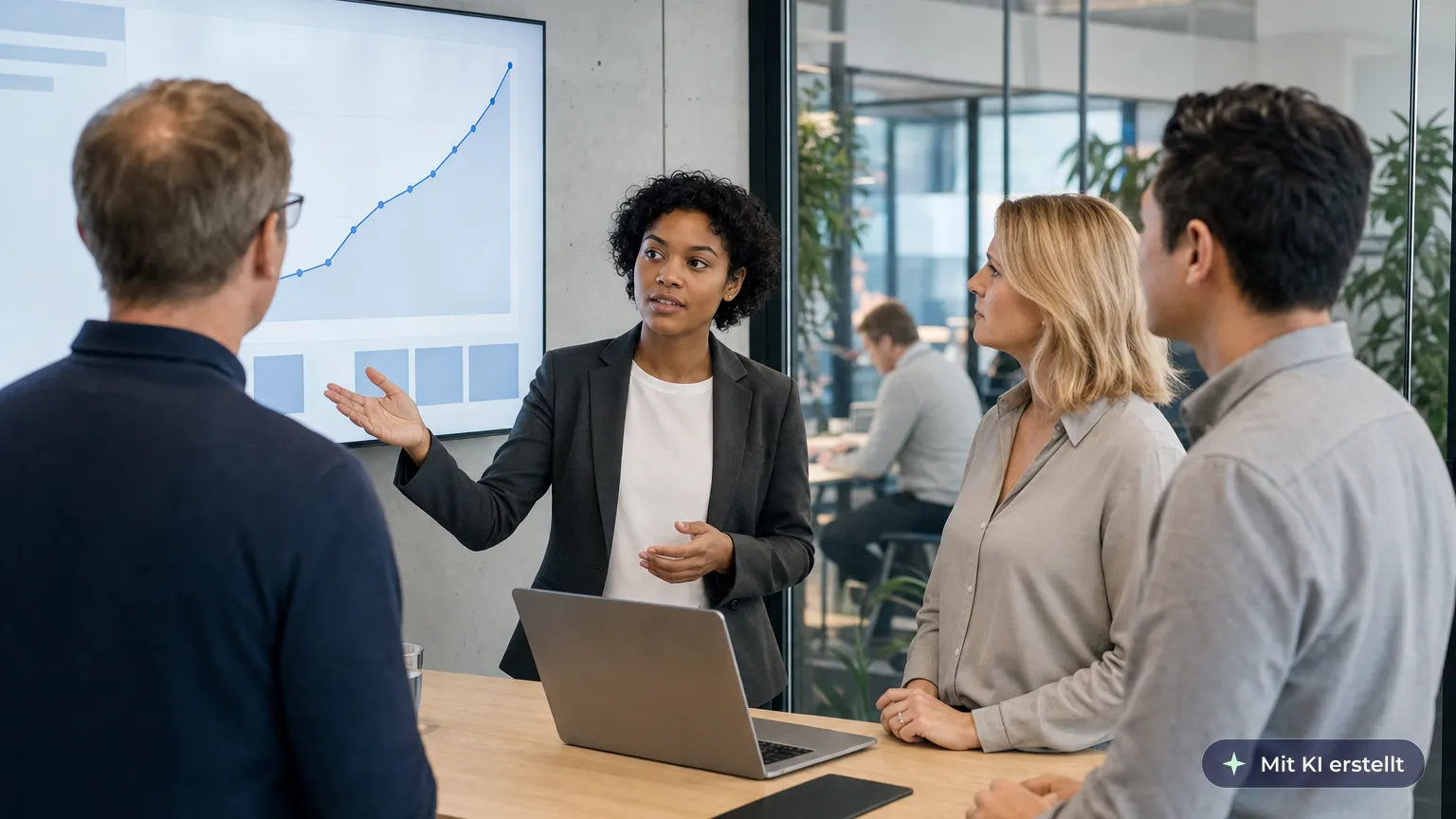
For women in their professional lives, becoming visible and being persuasive means confidently tackling typical hurdles and making targeted use of allies. You learn to communicate your performance with confidence and to claim space in meetings.
55 min
Multimodal
Über 30 Sprachen
Teilnahmebescheinigung
Women continue to be underrepresented in leadership positions, and this is rarely due to competence: their achievements are made visible less often, they negotiate salaries less often, their share of speaking time in meetings is lower, and they are interrupted more often. Empowerment does not mean adapting but consciously using your own strengths and recognizing structures that prevent visibility.
00 Fundamentals: visibility and hurdles
01 Communicating performance
02 Claiming space in meetings
03 Negotiating
04 Networks and allies
05 Summary
06 Knowledge check incl. certificate of completion
Women in all roles and at all career levels who want to strengthen their visibility and impact in their professional lives.
Leading organizations trust Bridgly
.png)

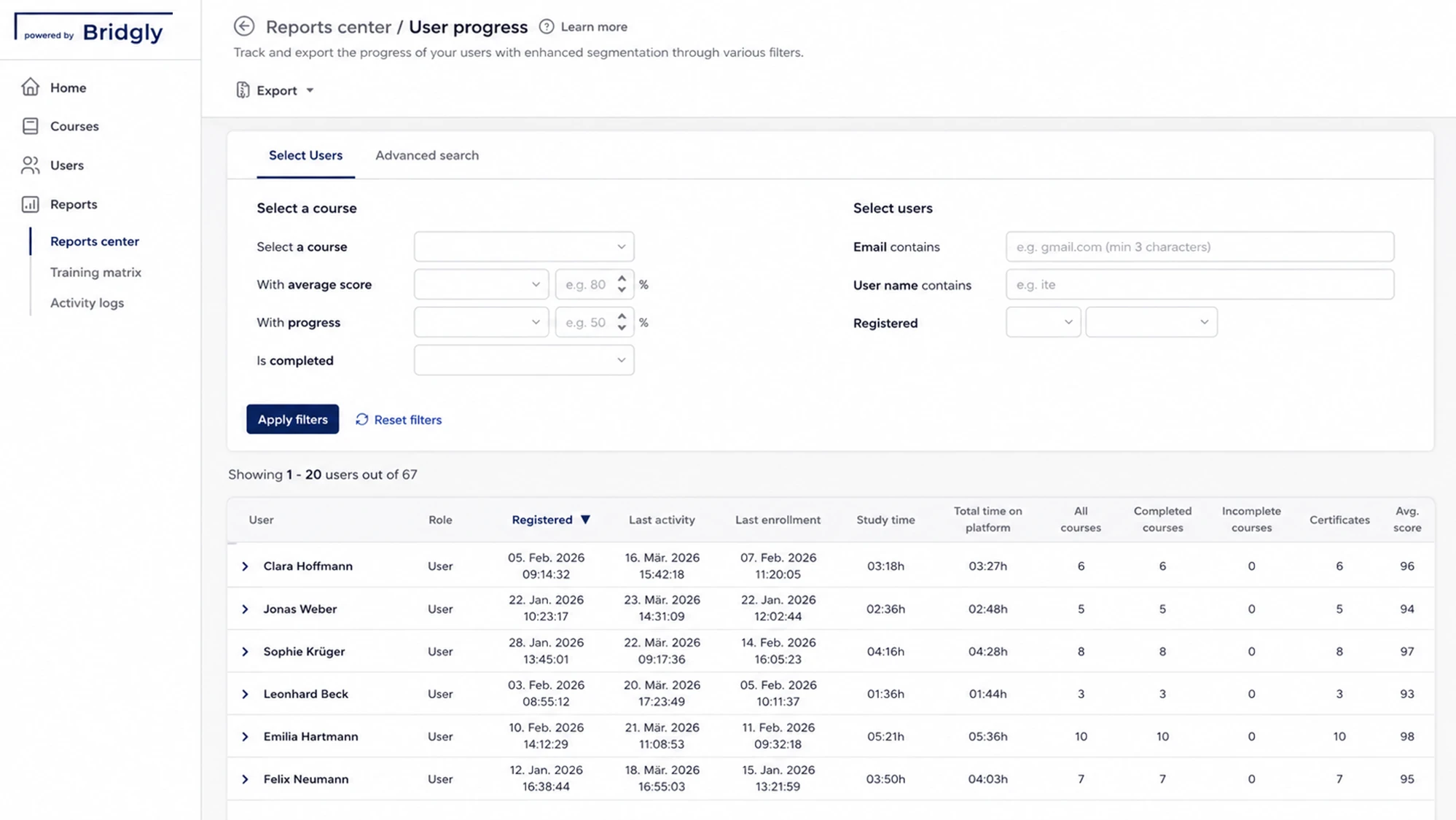
Our platform bundles all training management functions, from planning to reporting, in one place.
Training organization
Define who is trained on which content and when.
Training documentation
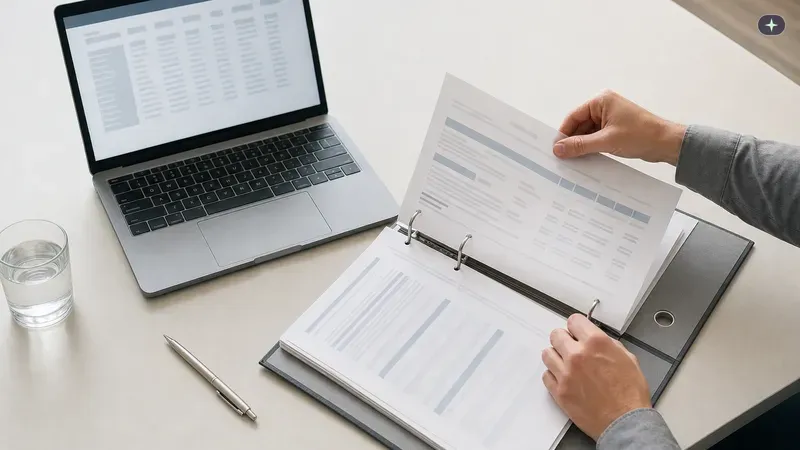
See at any time who completed which content and when.
Manage participants
CSV import, learning groups, and access rights in one place.
Automated
reminders
Deadlines and recurring training run automatically.
Here you will find the most important answers.
Yes. Section 5 (3) no. 6 of the Occupational Health and Safety Act (ArbSchG) expressly names "mental strain at work" as a hazard that the employer must identify as part of the risk assessment. The obligation applies regardless of industry, legal form, and number of employees; the Act does not provide for a de minimis threshold. Under Section 6 (1) ArbSchG, the employer must also have documentation showing the result of the assessment, the measures defined, and the result of their review. The assessment itself is an organizational task, not training: it records strain factors such as work intensity, scheduling of working hours, scope for decision-making, and social relationships. Training on coping with stress, recovery, or self-organization is one possible consequence — it is among the measures a company uses to respond to identified strain, but it does not replace the assessment. The fact that the topic is gaining importance is shown by the sick leave analysis by the IGES Institut for DAK-Gesundheit: in the first half of 2026, mental illnesses were the most common reason for sick notes in Germany for the first time.
At least once a year. Section 4 (1) DGUV Regulation 1 requires that instruction must be "repeated where necessary," must take place "but at least once a year," and must be documented. Section 12 (1) ArbSchG additionally prescribes it upon hiring, in the event of changes in the area of responsibility, and before the introduction of new work equipment or a new technology — in each case before the work begins. In terms of content, the topic is linked to Section 15 (2) DGUV Regulation 1: insured persons may not "put themselves into a state through the consumption of alcohol, drugs, or other intoxicating substances in which they may endanger themselves or others." Subsection 3 expressly extends this to taking medication. This does not result in a general workplace ban on alcohol; such a ban must be regulated separately, for example through a works agreement. In its factsheet "Alkohol am Arbeitsplatz" (Alcohol in the Workplace), the German Centre for Addiction Issues (Deutsche Hauptstelle für Suchtfragen) states that people under the influence of alcohol are involved in 20 to 25% of all occupational accidents and that around 5% of employees are alcohol-dependent, and up to 10% among managers.
Three strands of obligations interlock. Equipment: No. 6 of the Annex to the Workplace Ordinance (ArbStättV) governs the design of display screen workstations, display screen equipment, and work equipment; it is specified in more detail by the Technical Rules for Workplaces (ASR A6) "Display Screen Work" (July 2024 edition, GMBl 2024, p. 470). Health check-ups: Under Annex Part 4 (2) no. 1 ArbMedVV, an occupational health check-up must be offered for work with display screen equipment, which includes the offer of an appropriate examination of the eyes and eyesight; if this shows that special visual aids are necessary and normal ones are not suitable, these must be provided. Instruction: Section 6 (1) no. 4 ArbStättV expressly mentions work with display screen equipment, and under Section 6 (4) ArbStättV, instruction must take place before work begins and must then be repeated at least annually. In section 5.2, ASR A6 lists, among other things, the adjustment of work equipment and furniture, the arrangement of work equipment, and changing body posture as minimum content. For recovery breaks, section 5.3 names around five minutes per hour of uninterrupted display screen work as tried and tested in practice.
Up to 600 euros per calendar year per employee. Section 3 no. 34 EStG exempts from tax employer benefits "for the prevention and reduction of health risks and for the promotion of health in companies," "insofar as they do not exceed 600 euros per calendar year." Two conditions are strict: the benefit must be provided in addition to the wages already owed — salary conversion is excluded — and it must meet the requirements of Sections 20 and 20b SGB V with regard to quality, earmarking, targeting, and certification. For individual behavioral prevention, this usually means a course that has undergone certification under Section 20 (2) sentence 2 SGB V. For workplace health promotion under Section 20b SGB V, the tax authorities require a structured health promotion process with a needs analysis and employee participation; the details are set out in the BMF circular of April 20, 2021. Whether a specific measure falls under the tax allowance depends on this certification and must be checked on a case-by-case basis.
Mental illnesses. According to the sick leave analysis conducted by the IGES Institut on behalf of DAK-Gesundheit, they were the most common reason for sick notes in Germany for the first time in the first half of 2026. Sick notes for this reason rose by nine percent compared with the same period of the previous year, while respiratory diseases fell by 21%; diseases of the musculoskeletal system remained unchanged in third place. The overall sick leave rate was 5.3%, and thus 0.1 percentage points below the previous year's figure. Data from around 2.2 million employed DAK policyholders was analyzed. For company practice, duration is more meaningful than ranking: the average duration of illness rose from 9.5 to 9.7 days, and among those over 60, the sick leave rate increased by 0.3 percentage points because sick leave lasts longer. However, figures from a single health insurance fund reflect its policyholder structure and cannot simply be transferred to the entire working population.
The area comprises 15 online training courses that can be booked individually or as a package. Two of them are training courses of 25 minutes each: "Addiction Prevention: Alcohol and Drugs in the Workplace" and "Back Fitness at Work: Preventing Discomfort" — formats that can be used as initial training for new employees and as an annual refresher. The other 13 are professional development courses of 55 minutes each. Thematically, they range from physical and mental health ("Fit at Work," "Mental Health: Stress Management and Resilience") through self-organization ("Time and Self-Management," "Concentration and Memory," "Productive Working from Home," "Reading Faster on Screen") to personal development, dealing with change, and private retirement planning. Each training course has the same structure: five content modules, a summary, and a final learning assessment. All 15 are available in more than 30 languages.
Training and professional development for companies and public-sector clients – with audit-proof documentation and a practical focus.
Get in touch nowNote: Some text, images, and videos on this website were generated using artificial intelligence.
All content is for informational purposes and has been carefully reviewed from a journalistic perspective, but does not claim to be exhaustive or legally binding.