Safety & Occupational Health
Instruction under the Occupational Health and Safety Act (ArbSchG) and DGUV Regulation 1 for offices, production, logistics, construction, and care. From initial training through fire safety and first aid to hazardous substances, industrial trucks, and cranes.

Fire Safety and Behavior in the Event of a Fire
Organizational fire protection is part of everyday work, and everyone in the company can actively contribute to it. You learn how fires start, what dangers exist, and how you react in an emergency.
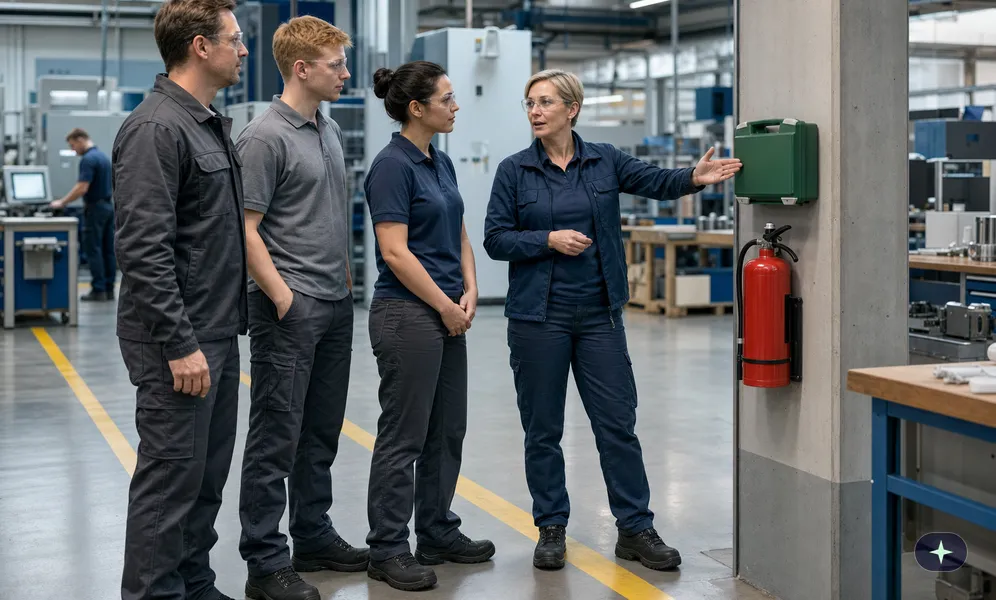
Introduction to Occupational Health and Safety (Initial Training)
Safe work starts with basic knowledge of occupational health and safety, which covers protective measures in everyday work as well as reporting channels in an emergency. You learn to recognize hazards and to respond responsibly to emergencies.
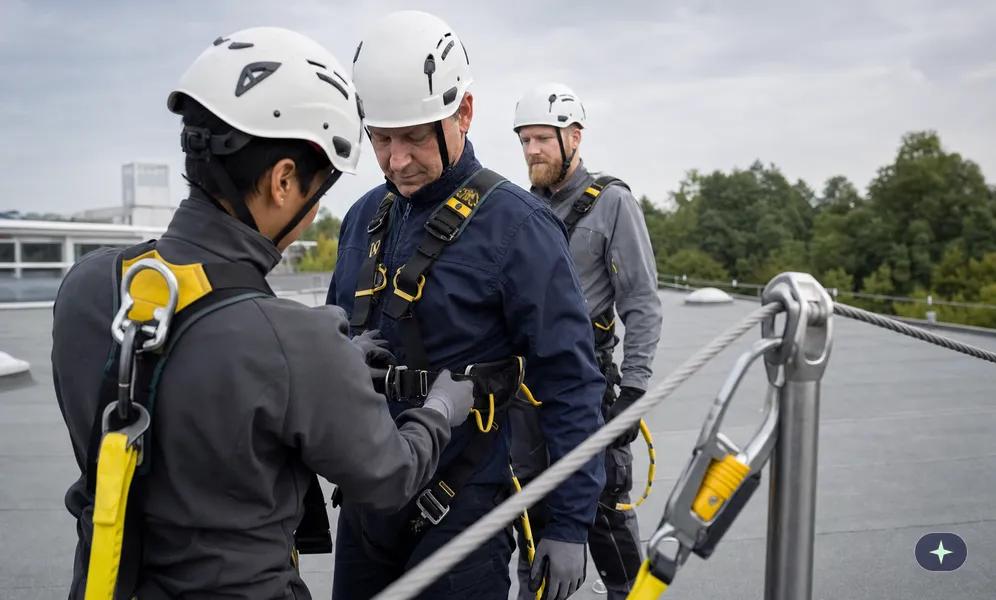
Personal Protective Equipment Against Falls (PSAgA)
Personal protective equipment against falls is only effective if it is correctly selected, put on, inspected, and used. You learn to assess anchor points and to use fall arrest systems correctly.

Working on Printing Presses
On printing presses, the most frequent serious accidents occur when cleaning rollers while they are running and when clearing faults without shutting down the machine. You learn to recognize danger points and to use protective devices correctly.

First Aid
In the event of accidents and medical emergencies at work, reacting correctly in the first few minutes is what counts. You learn to start the chain of survival and to perform immediate life-saving measures.

Explosion Protection
Explosive atmospheres can occur wherever flammable substances and dusts are involved. You learn to recognize Ex zones and to avoid ignition sources.
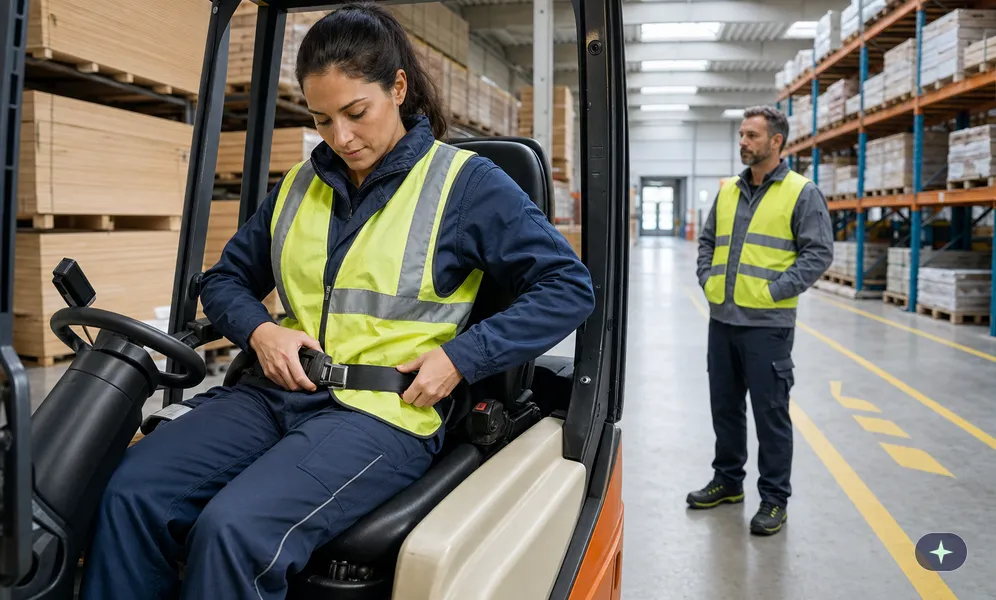
Operating Forklifts
Operating forklifts safely protects against accidents involving industrial trucks, which often have serious consequences. You learn about stability, load handling, and how to behave in traffic with pedestrians.

Hazards from Electric Current
In everyday work, electric current poses hazards that are fatal even at low current levels. You learn to recognize sources of danger and to respond correctly to electrical accidents.
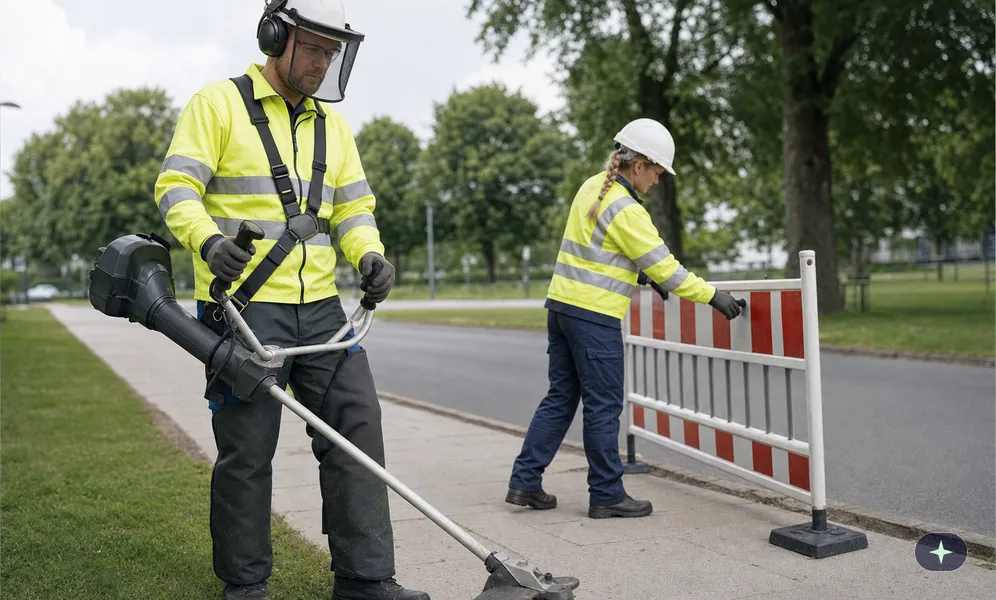
Working in Grounds Maintenance
Grounds maintenance combines numerous hazards, from cutting tools and ejected parts to traffic at the roadside. You learn to use machines and equipment safely and to work safely in road areas.

Working with Hand-Held Machines
Safe use of drills, angle grinders, circular saws, and nailers starts even before they are used. You learn to inspect equipment, use protective devices, and avoid the causes of accidents.
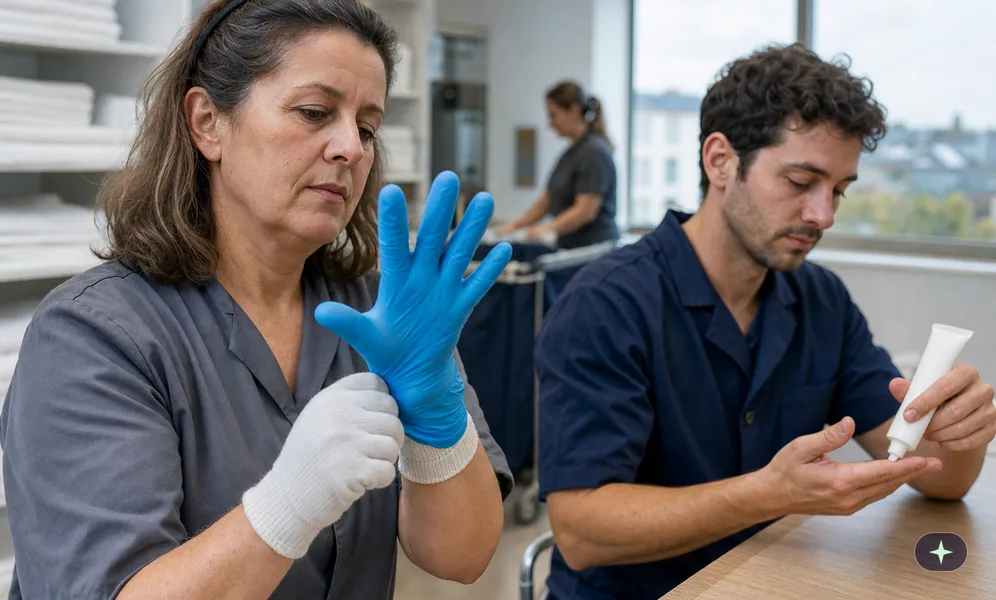
Skin Protection
The skin is subjected to heavy strain during work that stresses the skin and needs effective protection so that no skin damage occurs. You learn to apply the skin protection plan and to notice the first signs of skin diseases.

Lifting and Carrying Loads
Anyone who assesses load limits, applies lifting techniques correctly, and uses technical aids protects their back, joints, and intervertebral discs. Your employees learn to lift, carry, and set down loads in a back-friendly way.

Working from Home and Mobile Work
The Occupational Health and Safety Act (ArbSchG) also applies when working from home, but the employer cannot control the conditions at home. You learn to work ergonomically, take breaks as required, and protect information.

Operating Mobile Elevating Work Platforms
Mobile elevating work platforms replace ladders and scaffolding, yet they are still associated with serious fall, crushing, and tip-over accidents. You learn to check stability, to secure yourself in the basket, and to use the emergency lowering system.

Personal Hygiene
Personal hygiene is crucial in the workplace, because people are the most common source of pathogen transmission. You learn to interrupt routes of infection with hand hygiene and correct workwear.

Working with Industrial Robots
Most robot accidents happen during setup, teaching, and troubleshooting. You learn to use protective devices and operating modes.

Infection Control: Follow-Up Instruction under Section 43 IfSG
The follow-up instruction under Section 43 IfSG is required every two years for everyone who produces, handles, or places food on the market. You learn which illnesses and symptoms lead to work prohibitions.
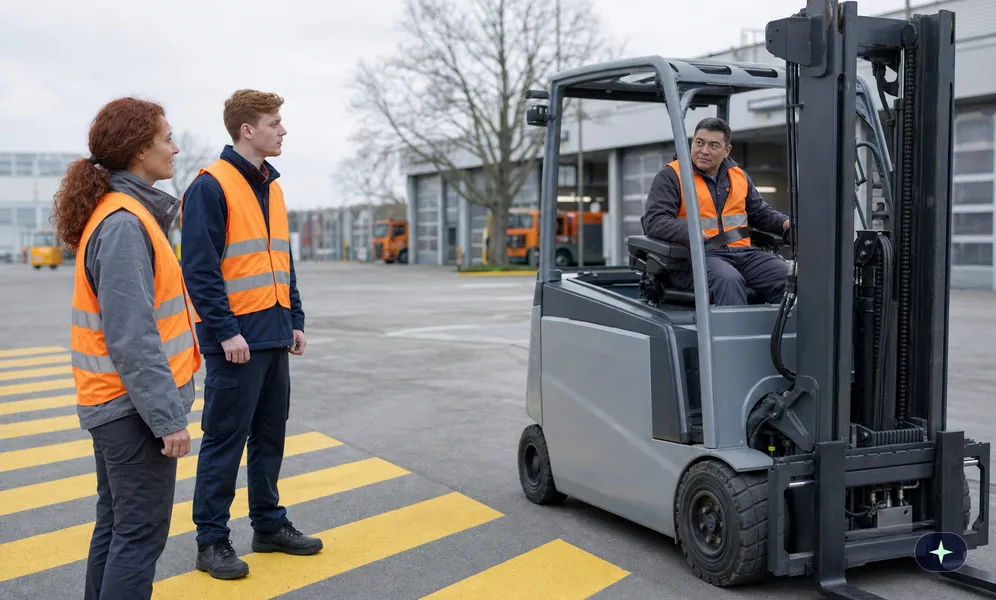
Internal Transport
In internal transport, everyone is called upon, whether as a driver, pedestrian, or manager. You learn to use traffic routes and means of transport safely and to avoid collisions.
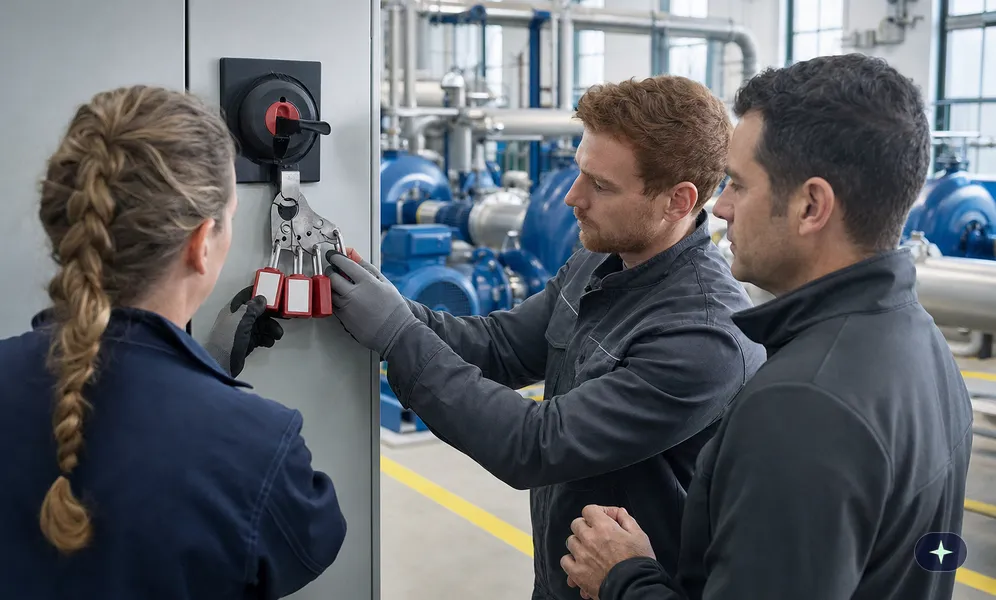
Maintenance Work
A disproportionately high number of serious accidents occur during maintenance work on machinery and equipment. Your employees learn to isolate equipment safely and to use work permits.
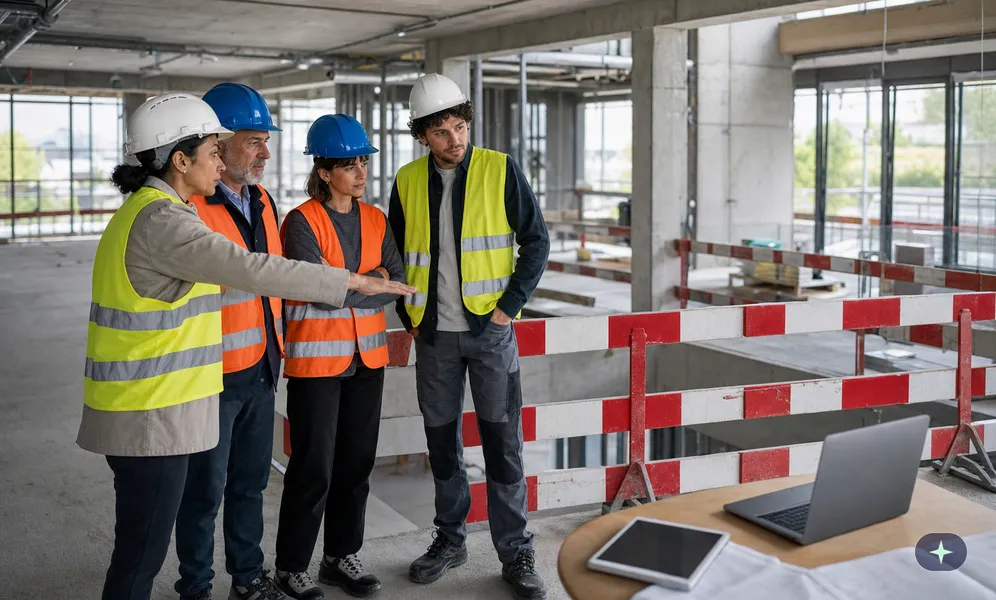
Coordinating Work Activities
When several companies or trades work on one site, their activities must be safely coordinated and aligned. You learn about mutual hazards and the role of the coordinator.

Load Securing
Drivers, loaders, and vehicle owners are equally responsible for securing loads on vehicles and trailers. You learn to understand the physical principles and to use lashing equipment correctly.

Working in Kitchens and Canteens
In commercial kitchens, knives, slicers, hot fat, steam, wet floors, and time pressure during service all come together. You learn to avoid cuts, burns, and falls and to work hygienically.
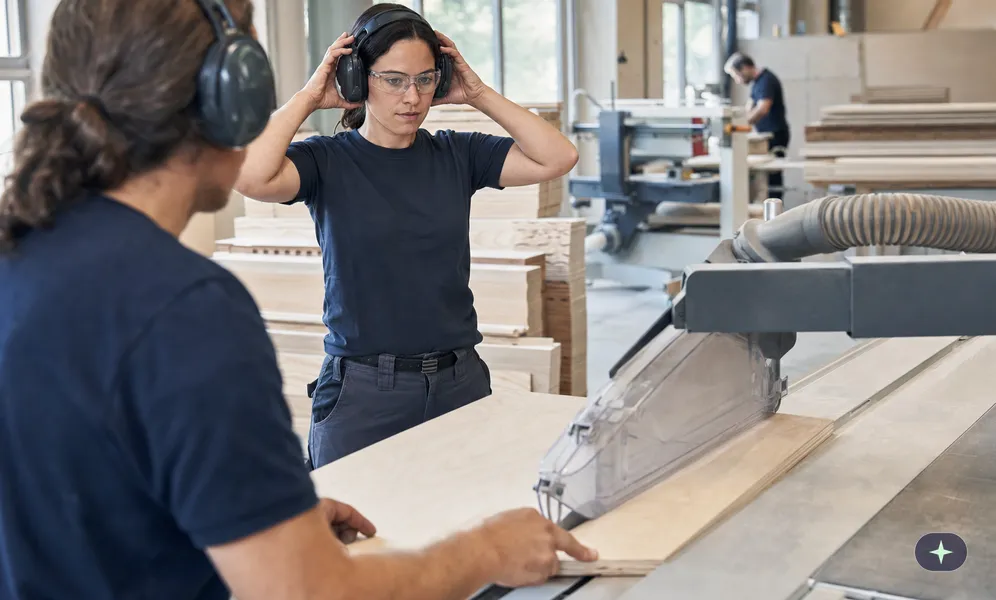
Noise and Hearing Protection
Noise at work damages hearing, and the LärmVibrationsArbSchV sets out the obligations to protect against it. You learn to understand exposure action values and to select and wear hearing protection correctly.
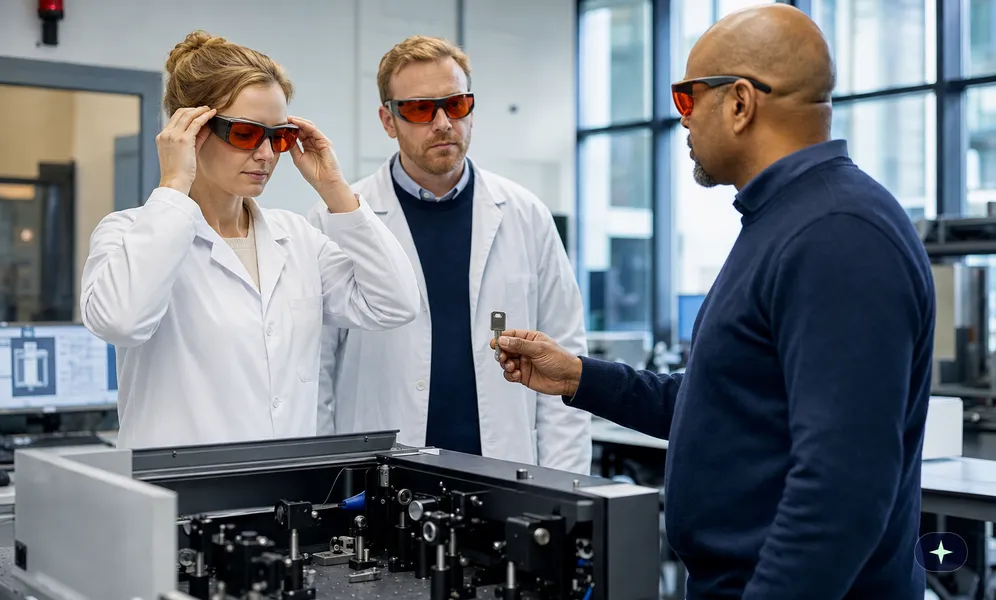
Laser Safety
Working safely with laser equipment means knowing the hazards of laser radiation and the role of the laser safety officer. You learn to distinguish between laser classes and to use laser safety goggles correctly.

Using Ladders and Step Stools
Falls from low heights can be prevented if ladders and step stools are selected, inspected, and used safely. Your employees learn when a ladder is the right work equipment in the first place.
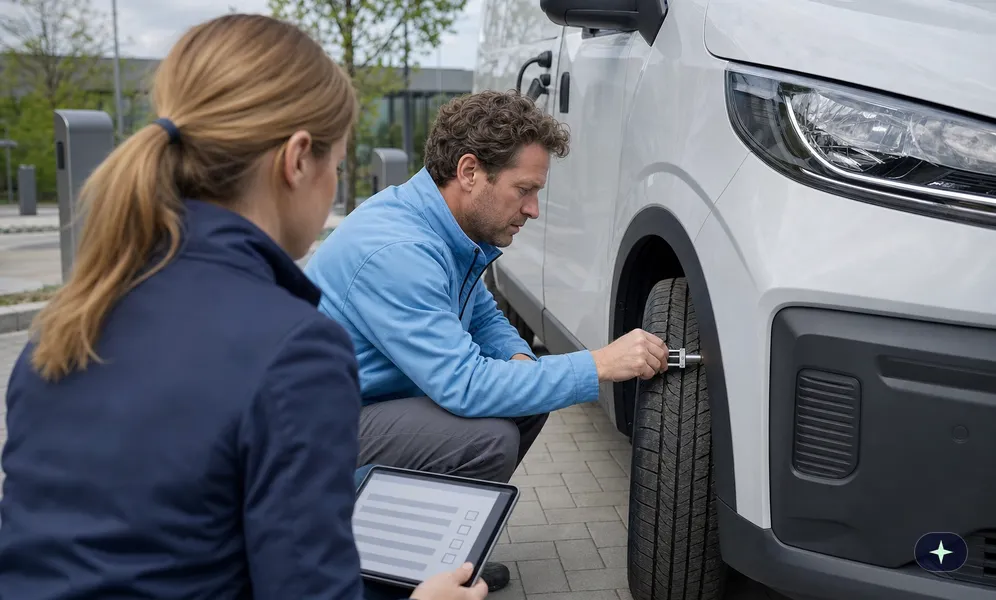
Using Motor Vehicles in Road Traffic
Anyone who drives company cars or fleet vehicles is out in road traffic, the most common cause of fatal occupational accidents. You learn to inspect vehicles, avoid distractions, and respond correctly in the event of accidents.
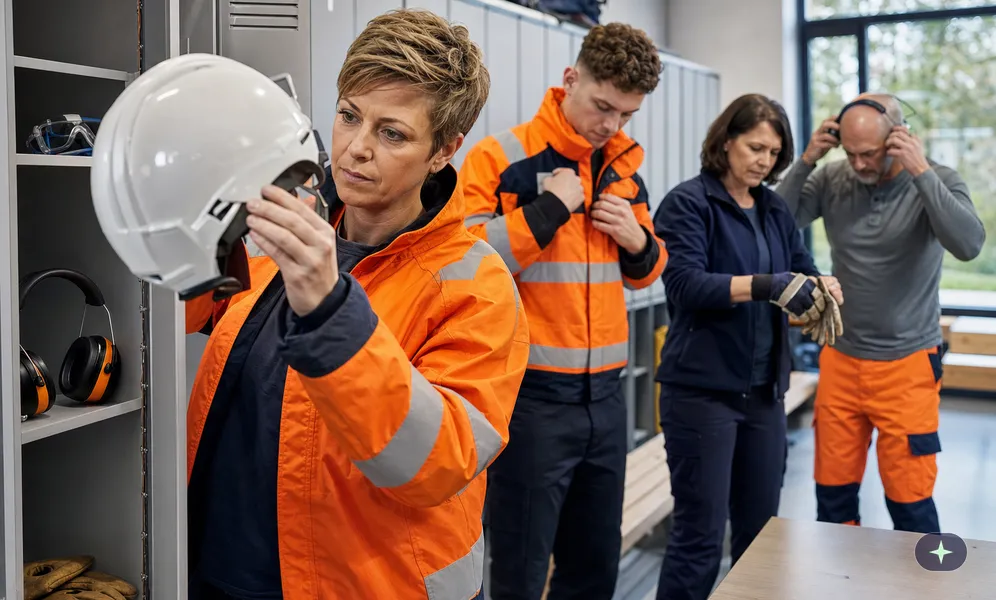
Personal Protective Equipment (PPE)
Personal protective equipment only protects if it is selected on the basis of the risk assessment and used correctly. Your employees learn to use PPE correctly and to pay attention to fit and condition.

Office and Computer Workstations
At first glance, the risk in the office seems low, but prolonged improper strain leads to musculoskeletal disorders. You learn to effectively avoid typical hazards at office workstations.

Safety and Health Protection Signage
Reading the safety and health protection signage at the workplace correctly helps with orientation in an emergency. You learn to distinguish between prohibition, mandatory, warning, rescue, and fire safety signs.

Trip, Slip, and Fall Hazards
Many trip, slip, and fall accidents at work are avoidable, for example through order and cleanliness on traffic routes. You learn to recognize typical danger spots and to wear suitable footwear.
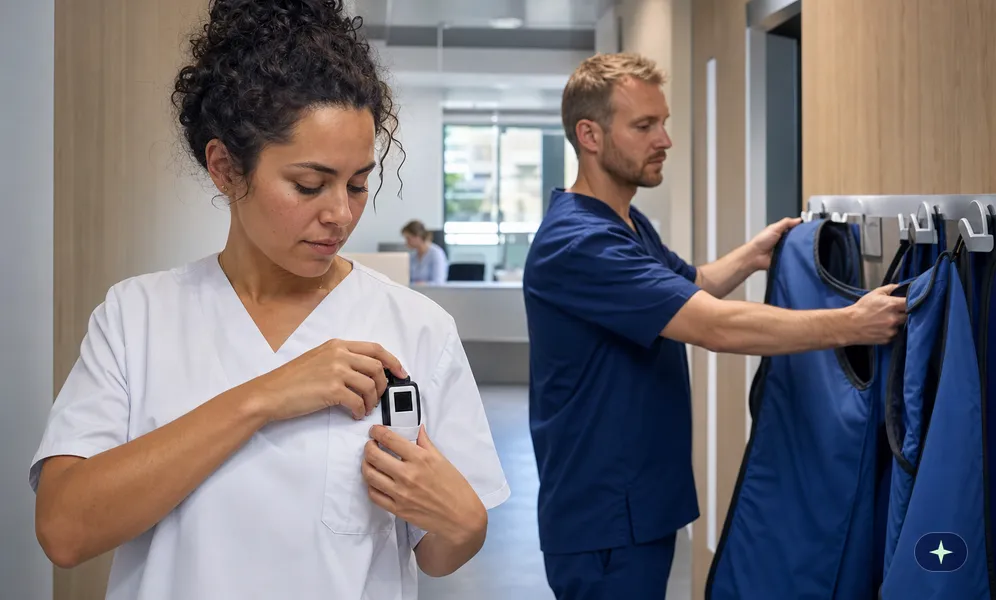
Radiation Protection
In controlled areas and when handling radiation sources, ionizing radiation poses hazards that require systematic protection. You learn to apply the basic principles of radiation protection and to use dosimeters.

Working with Hand Tools
Even simple hand tools can cause cuts and crush injuries if they are used without being checked or are used incorrectly. You learn to use hammers, screwdrivers, pliers, knives, and files safely.
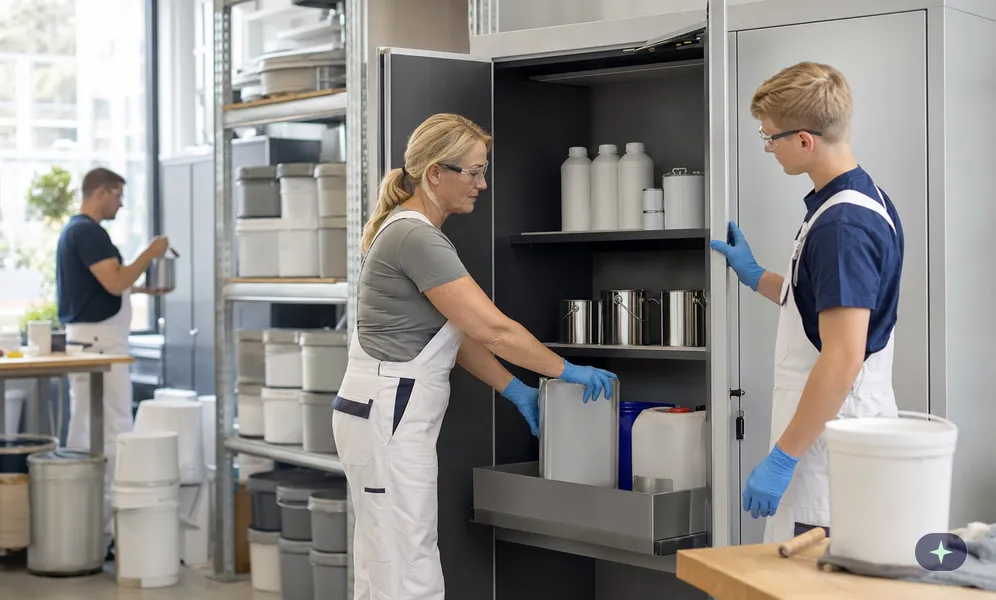
Handling Hazardous Substances
Handling hazardous substances safely covers identifying, storing, and using them as well as how to behave in the event of a release, skin contact, or fire. Your employees learn to read GHS/CLP labeling and safety data sheets.
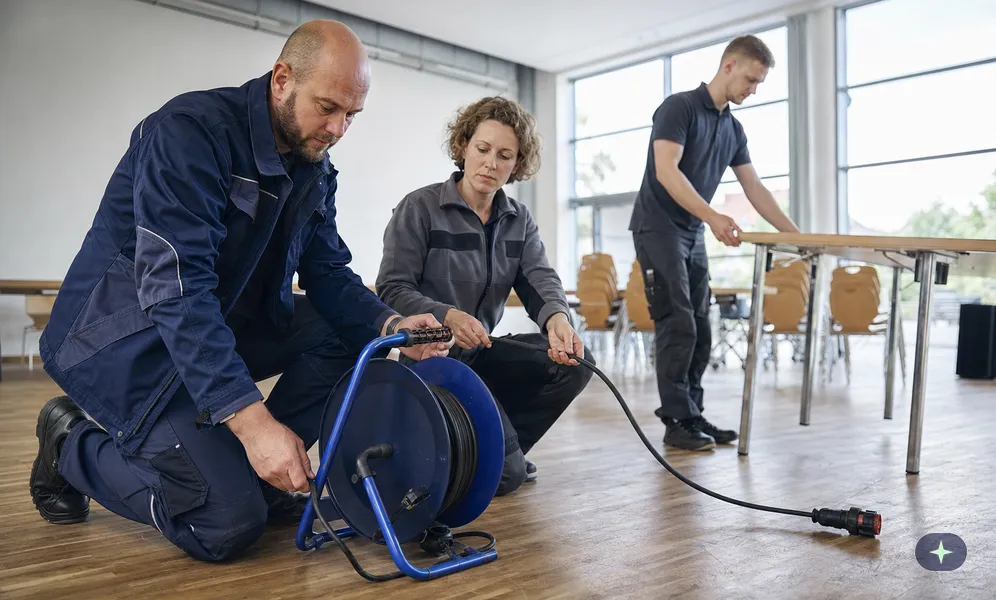
Handling Electrical Equipment
Electrical equipment such as devices, extension cords, chargers, and machines can cause electrical accidents and fires if it is defective. You learn to check equipment and to understand protection classes and inspection stickers.

Loading and Unloading Vehicles
At ramps, gates, and outdoors, loading and unloading depends on the correct use of dock levelers and tail lifts. You learn to secure vehicles against rolling away and to prevent falls and crushing injuries.
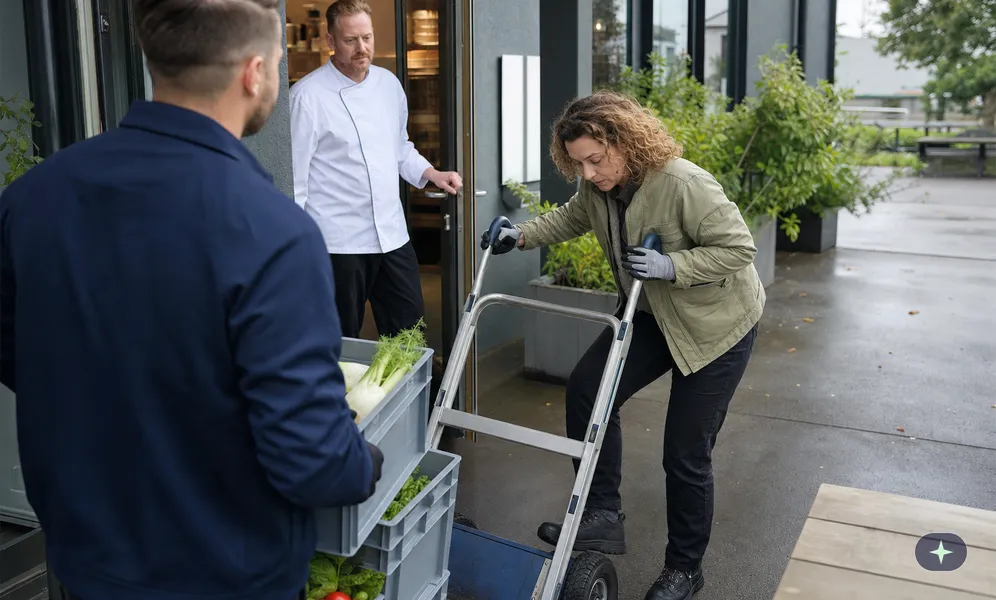
Use of Work Equipment
The same basic rules of the Ordinance on Industrial Safety and Health (BetrSichV) apply to work equipment, from simple devices to machines and installations. You learn the importance of operating instructions, inspections, and protective devices.
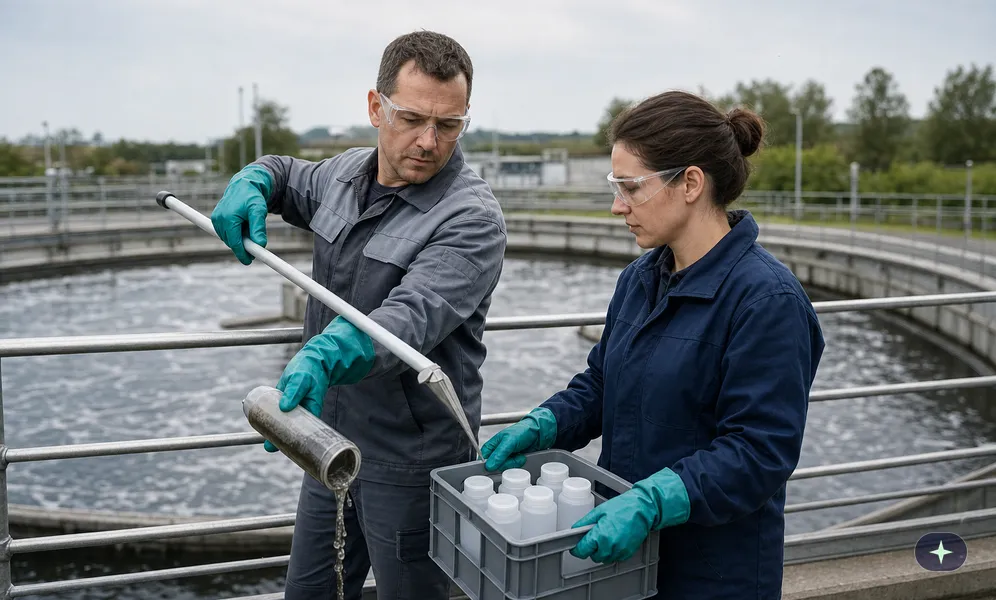
Handling Biological Agents
Handling biological agents such as bacteria, viruses, fungi, and parasites entails the risk of infections, allergies, and poisoning. You learn to understand risk groups and protection levels and to apply protective measures.
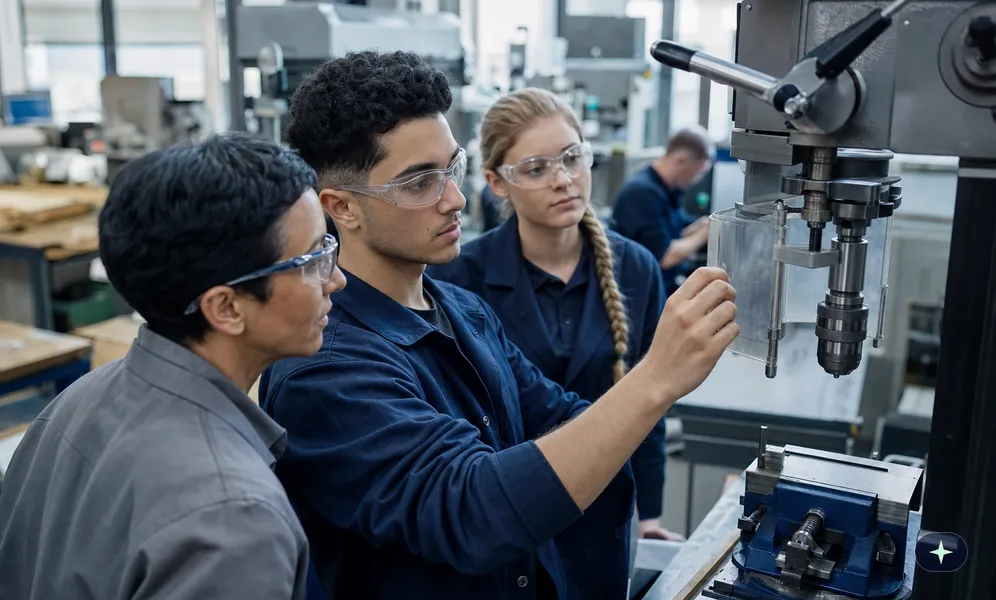
Turning, Milling, and Drilling
On lathes, milling machines, and drilling machines, rotating tools and flying chips cause serious accidents. You learn to clamp workpieces and tools securely and to use protective devices.

Fire Safety in Educational Institutions
In schools and daycare centers, many people spend time in a confined space, including children and adolescents who need instructions. Your employees learn to recognize fire risks and to organize the evacuation.
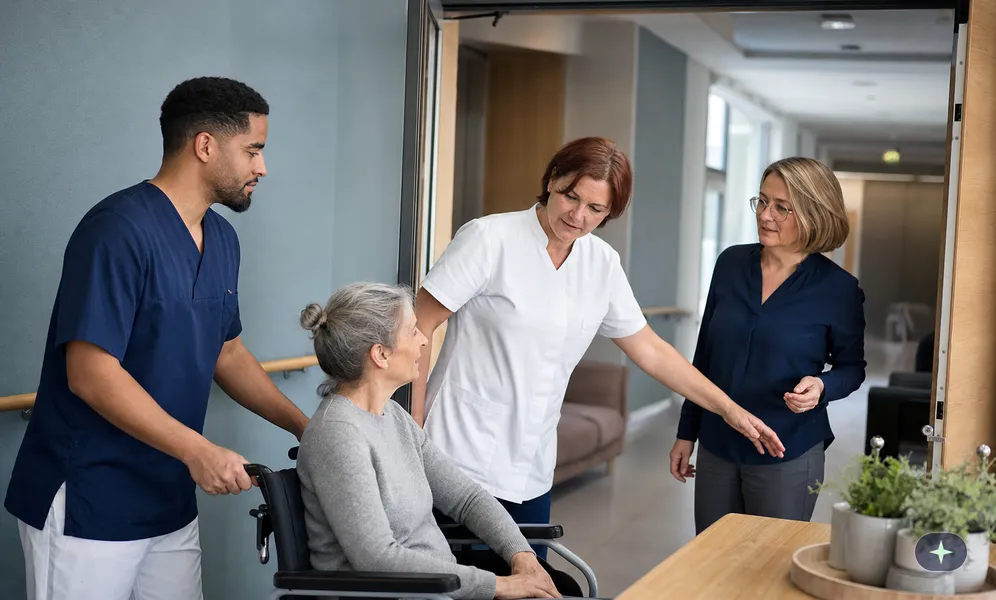
Fire Safety in Care Facilities
Fire safety in care facilities relies on the fire safety regulations, alarm procedures, fire compartments, and smoke control doors. You learn to recognize fire risks and to evacuate people with limited mobility.
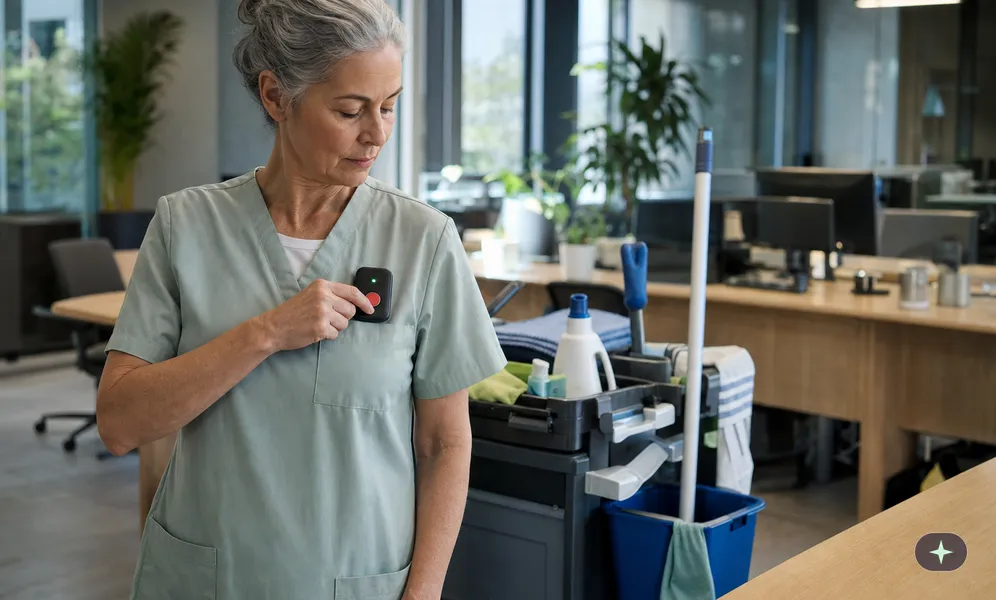
Working Alone
Safety when working alone relies on monitoring and emergency call systems and on an organization that ensures help arrives quickly in an emergency. Your employees learn to distinguish dangerous lone working from permissible lone working.
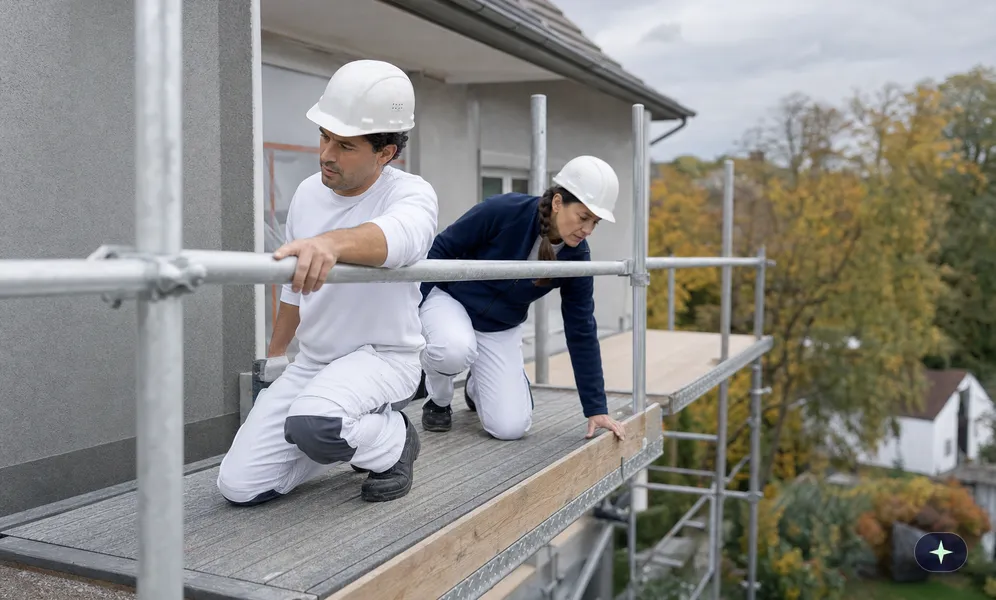
Working on Facade Scaffolding
When working on facade scaffolding, approval and labeling, load classes, and conduct in wind and weather are what matter. You learn to inspect scaffolding before use and to use access routes correctly.
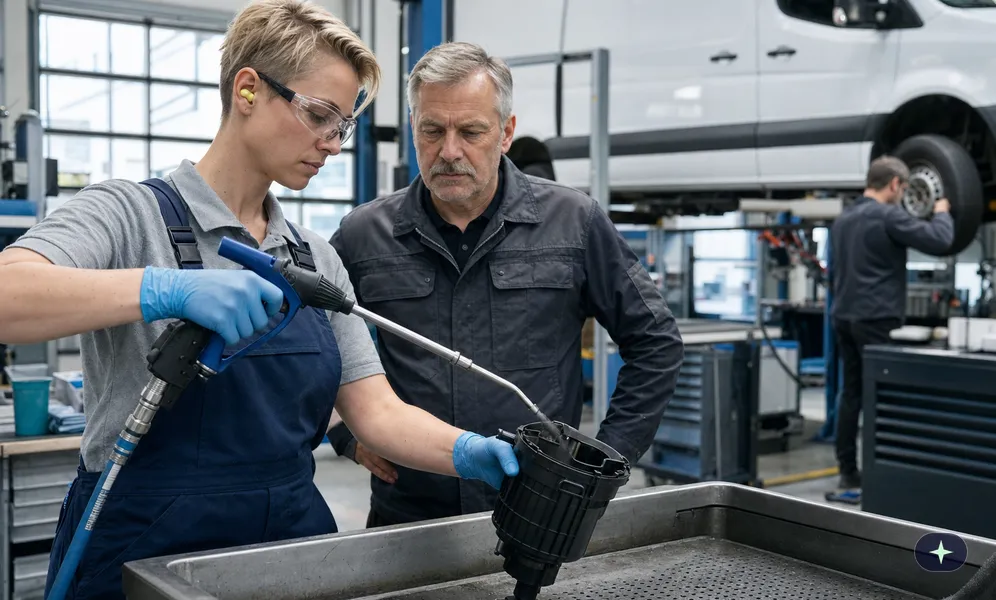
Working with Compressed Air
Working with compressed air systems, pneumatic tools, and hoses poses hazards to the body and hearing. You learn to handle couplings and hoses correctly and never to blow compressed air at people.

Occupational Health and Safety for Managers
In occupational health and safety, managers are responsible for their area, from the risk assessment to instruction and monitoring. You learn to fulfill this responsibility and to avoid liability risks.

Operating Earthmoving Machinery (Excavators)
When driving, digging, and lifting loads, earthmoving machinery such as excavators and wheel loaders must be operated safely. You learn to inspect the machine, observe danger zones, and identify utility lines.
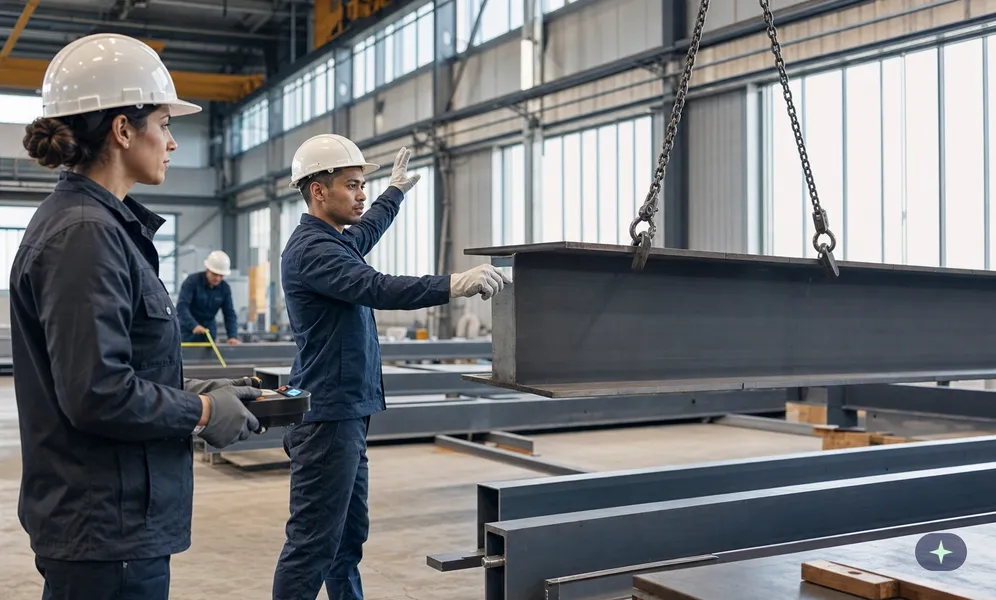
Operating Cranes
Crane accidents involving indoor overhead cranes, gantry cranes, and bridge cranes are often fatal, for example when loads fall after being slung incorrectly. You learn to inspect the crane, sling loads correctly, and keep danger zones clear.
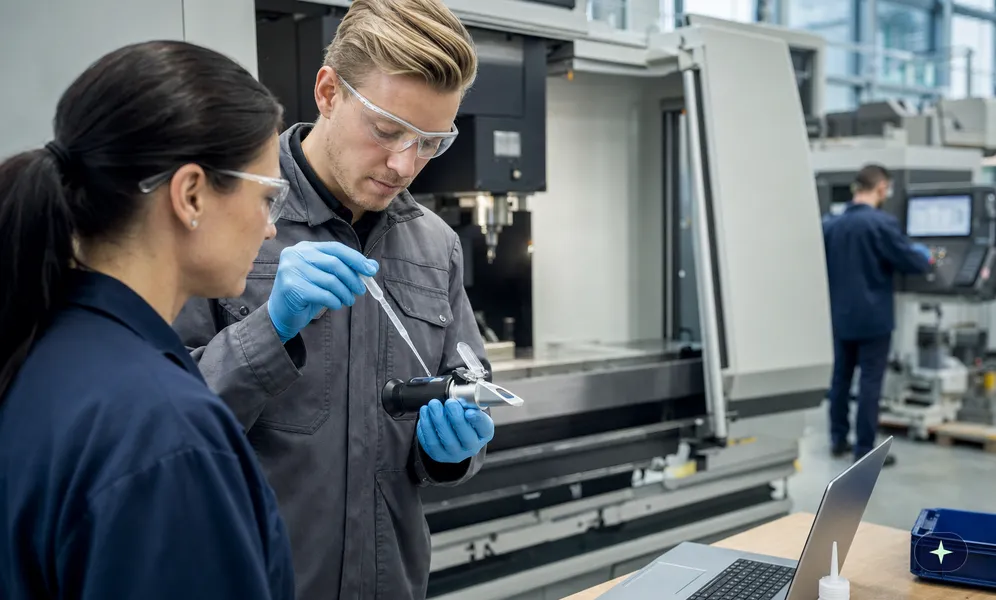
Handling Cooling Lubricants
Water-mixed and non-water-miscible cooling lubricants pose hazards to the skin and respiratory tract. You learn to use skin protection and extraction correctly.
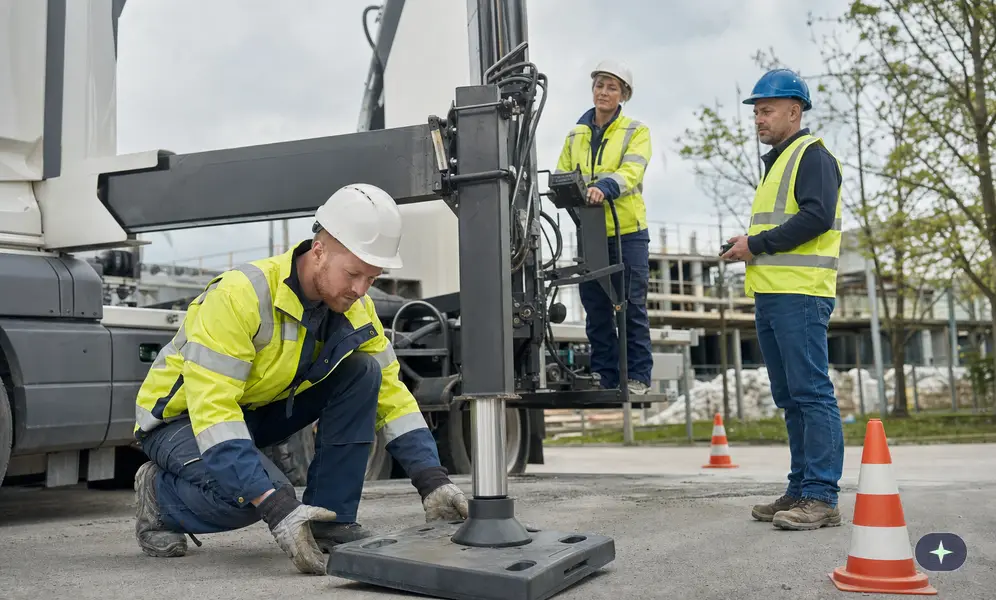
Operating Truck-Mounted Loader Cranes
Tipping over due to inadequate outrigger support and contact with overhead power lines are among the typical serious accidents involving truck-mounted loader cranes. You learn to inspect the crane and outriggers before use and to sling loads correctly.
Training Concept
Anytime and anywhere thanks to
adaptive e-learning
Multimodal, with learning objectives, video sequences, and knowledge quizzes
Audit-proof issuance after a knowledge check
Depending on the course, between 20 and 150 minutes
More than 30 languages
Content regularly reviewed by subject matter experts for maximum regulatory compliance
Our Expert Team
Every training topic is designed and reviewed by renowned subject matter experts who have both sound theoretical knowledge and extensive practical experience.



.webp)









Frequently Asked Questions
Here you will find the key answers on annual safety instruction, role-specific content, and the recognition of digital instruction by the DGUV.
Give your employees tailored training in occupational health and safety and fire protection now
Mandatory training and professional development courses from ergonomics at computer workstations to first aid – audit-proof and activity-specific.
Get in touch now