
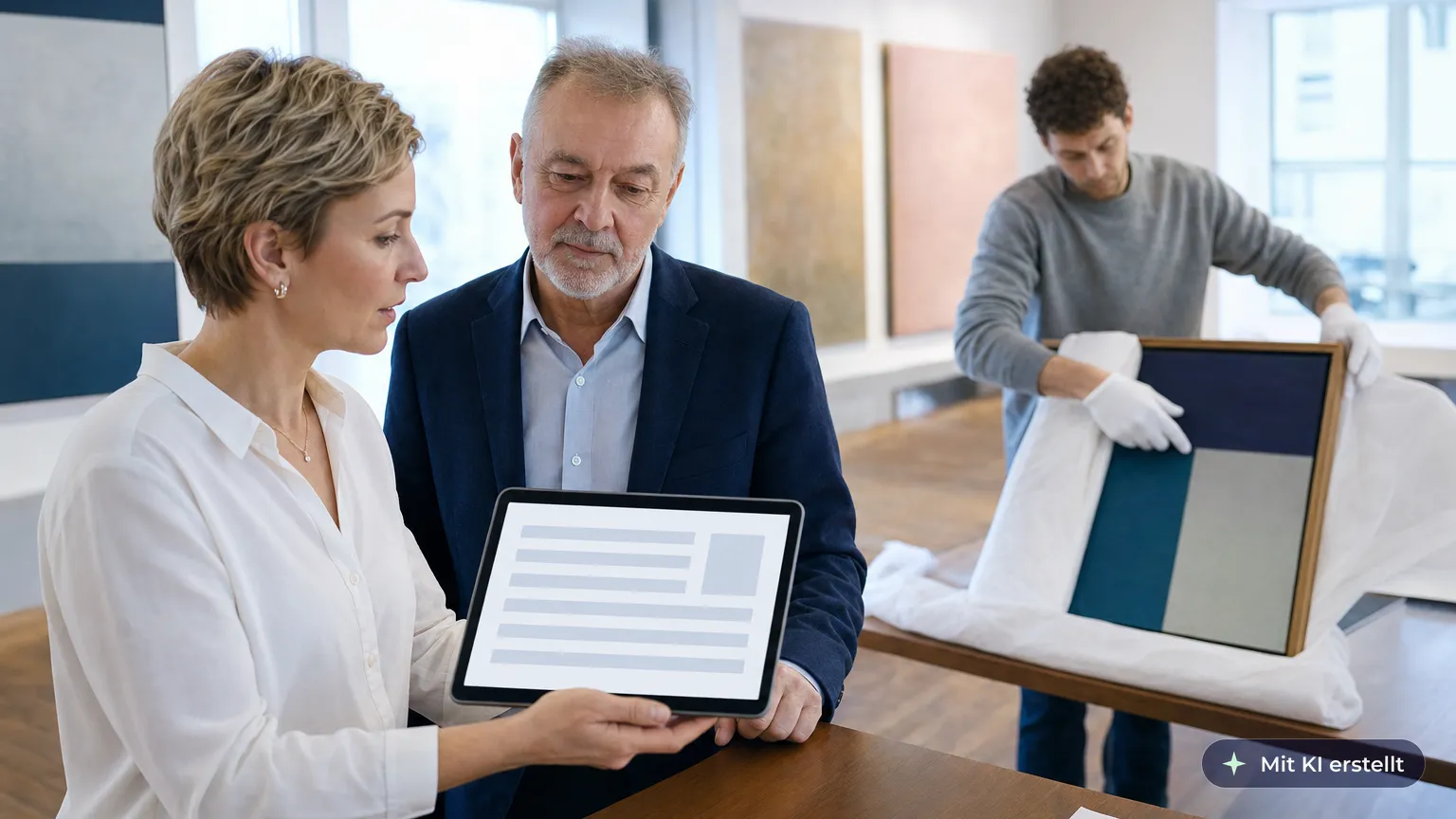
For traders in goods, art intermediaries, and art storage providers, the full due diligence obligations apply once the statutory thresholds are reached. You learn to recognize risks, apply due diligence obligations, and report suspicious cases.
25 min
Multimodal
Über 30 Sprachen
Teilnahmebescheinigung
High-value goods such as vehicles, jewelry, precious metals, and works of art can be acquired with cash and moved internationally, often without transparent pricing. Once the statutory cash thresholds are reached, and for art transactions of 10,000 euros or more, the full due diligence obligations apply, regardless of company size. Starting July 2027, AMLR 2024/1624 harmonizes the obligations and tightens customer due diligence, transparency, and reporting. In the first line of defense, violations lead to fines, supervisory measures, and personal liability.
00 Fundamentals of money laundering and terrorist financing
01 Legal framework: GwG and AMLR 2024/1624
02 Industry-specific risks and red flags
03 Customer due diligence in practice
04 Suspicious activity reporting, documentation and consequences
05 Summary
06 Knowledge check incl. certificate of completion
Employees with customer or transaction contact in the goods and art sector, suitable as initial training and as an annual refresher in accordance with Section 6 of the German Money Laundering Act (GwG).
Leading organizations trust Bridgly


.png)
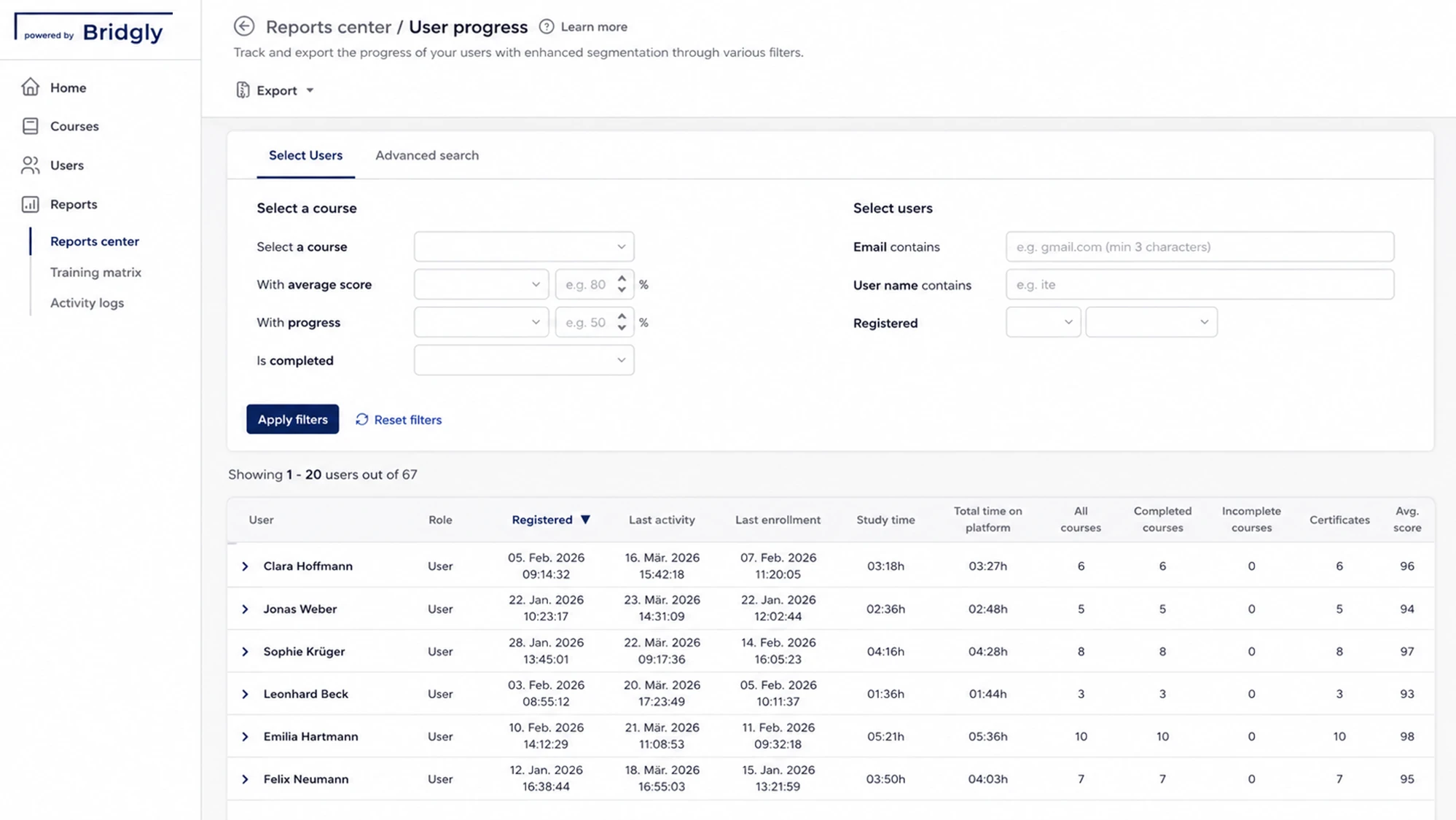
Our platform bundles all training management functions, from planning to reporting, in one place.
Training organization
Define who is trained on which content and when.
Training documentation
See at any time who completed which content and when.
Manage participants
CSV import, learning groups, and access rights in one place.
Automated
reminders
Deadlines and recurring training run automatically.
Here you will find the most important answers.
Training and professional development for companies and public-sector clients – with audit-proof documentation and a practical focus.
Get in touch now
Bridgly is the European training partner for audit-proof, tailored, and automated training and professional development.
 We support the IHK initiative "Pack ma's digital" to help businesses in Upper Bavaria with digitalisation and secure the future of the region.
Note: Some text, images, and videos on this website were generated using artificial intelligence.
All content is for informational purposes and has been carefully reviewed from a journalistic perspective, but does not claim to be exhaustive or legally binding.